
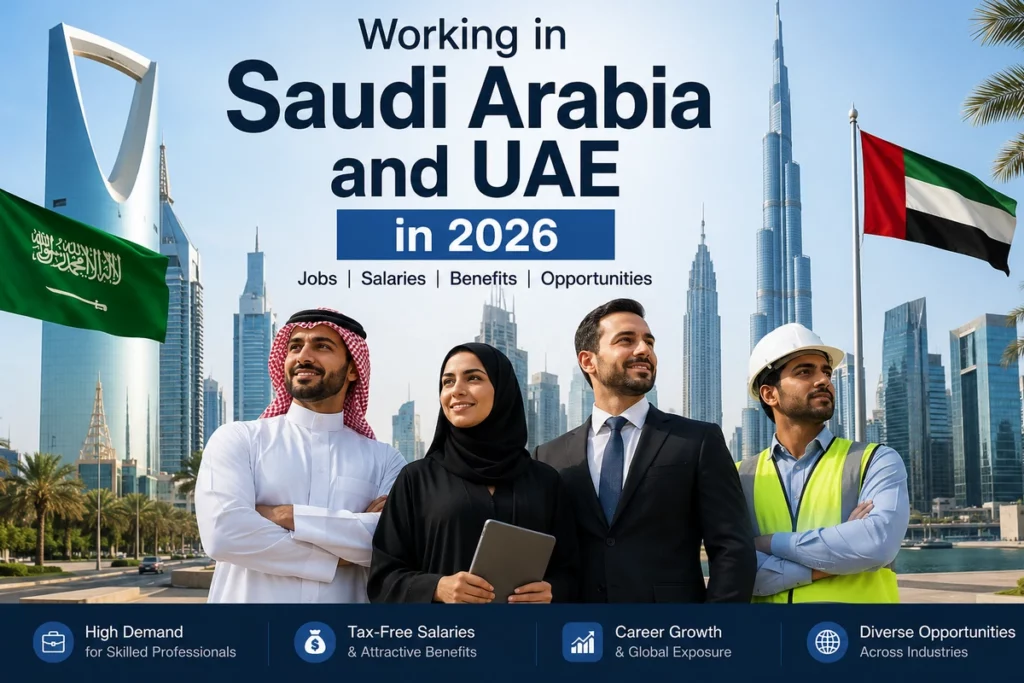
Saudi Arabia and the United Arab Emirates (UAE) are among the most popular destinations for foreign workers. Millions of expats live and work in both countries, attracted by tax-free salaries, modern cities, and strong job opportunities.
In 2026, both countries continue investing in technology, healthcare, construction, tourism, and renewable energy, creating demand for skilled international workers.
Are You Eligible for the James Madison Graduate Fellowship?
Answer 8 quick questions and get a personalized eligibility report with your score, strengths, and next steps — in under 2 minutes.
Analyzing Your Eligibility...
Boost Your Application Score
Take our Advanced Quiz to uncover hidden strengths and get a full action plan to maximize your fellowship chances.
You're a Strong Candidate!
Based on both quizzes, you have a solid profile for fellowship and scholarship applications. Here's your action plan:
Your Top 5 Next Steps
If you are planning to work in Saudi Arabia or the UAE, this guide explains the basics of work visas, legal requirements, in-demand jobs, and important rules you should know before applying.
Disclaimer: This article is for general information only and should not be considered legal or immigration advice. Always check official government websites before applying.
Saudi Arabia vs. UAE
Both countries offer excellent career opportunities, but there are some important differences.
Saudi Arabia mainly uses an Employment Visa followed by an Iqama (residence permit), while the UAE issues a Work Permit and Residence Visa.
Advertisements1
Find Your Best Opportunity in 30 Seconds
Answer 5 quick questions and we'll match you with the best scholarships, visas, and work opportunities for your exact profile.
🎯 Your Top Matches
Ranked by compatibility with your profile
The UAE generally has faster visa processing, while Saudi Arabia currently offers many opportunities through Vision 2030 mega-projects.
Both countries have 0% personal income tax, making them attractive destinations for international workers.
Working in Saudi Arabia
Saudi Arabia is transforming its economy through Vision 2030, creating thousands of new jobs in construction, technology, healthcare, tourism, and entertainment.
Foreign workers usually need a valid job offer before applying for a work visa.
Saudi Arabia Work Visa
The standard Employment Visa allows foreign workers to enter the country. After arrival, the employer applies for an Iqama, which serves as the employee’s official residence permit.
The Iqama allows you to:
- Work legally
- Open a bank account
- Rent accommodation
- Access healthcare
- Sponsor eligible family members
Employers are generally responsible for obtaining and renewing the Iqama.
New Skills Classification
Saudi Arabia now classifies foreign workers based on their qualifications and experience.
The main categories include:
- High-skilled professionals
- Skilled workers
- Basic workers
Your education, experience, salary, and occupation all affect your classification.
Working in the UAE
The UAE remains one of the world’s leading destinations for international professionals.
Dubai, Abu Dhabi, and several free zones continue to attract workers from around the world.
Most foreign workers receive an employer-sponsored work permit and residence visa.
The process usually includes:
- Receiving a job offer
- Employer applying for the work permit
- Medical examination
- Emirates ID registration
- Residence visa approval
Processing is generally completed within a few weeks.
UAE Golden Visa
The UAE also offers the Golden Visa, which provides long-term residency for eligible professionals, investors, entrepreneurs, and talented individuals.
Eligibility depends on factors such as profession, investment, qualifications, and experience.
Unlike standard work visas, some Golden Visa holders do not require employer sponsorship.
In-Demand Jobs in 2026
Both countries continue hiring skilled workers in several industries.
Popular sectors include:
- Construction
- Engineering
- Information Technology
- Artificial Intelligence
- Cybersecurity
- Healthcare
- Nursing
- Tourism and Hospitality
- Education
- Finance
- Renewable Energy
Technology professionals remain among the most sought-after workers across the Gulf region.
Official Government Resources
Before applying for a job or work visa, always verify the latest requirements through official government websites.
Saudi Arabia
- Qiwa Platform – Employment contracts, labor services, and employer verification
https://qiwa.sa/en - Absher – Residency services, Iqama, and government e-services
https://www.absher.sa - Ministry of Human Resources and Social Development (HRSD) – Labor laws and employment regulations
https://hrsd.gov.sa - Saudi Visa Platform – Official visa information and applications
https://www.ksavisa.sa - Premium Residency Center – Saudi Premium Residency Program
https://www.prc.gov.sa
United Arab Emirates (UAE)
- MOHRE – Ministry of Human Resources and Emiratisation
https://www.mohre.gov.ae - ICP – Federal Authority for Identity, Citizenship, Customs and Port Security
https://icp.gov.ae - UAE Government Portal – Official visa, residency, and Emirates ID information
https://u.ae/en/information-and-services/visa-and-emirates-id
Tip: Always use official government websites to check visa rules, work permit requirements, and the latest immigration updates before submitting your application.
Worker Rights
Before accepting any job offer, it is important to understand your rights.
Employers are generally responsible for:
- Providing legal work authorization
- Paying agreed salaries
- Following local labor laws
- Providing mandatory health insurance where required
Workers should always read their employment contracts carefully before signing.
Bringing Your Family
Both Saudi Arabia and the UAE allow many foreign workers to sponsor family members if they meet salary and residency requirements.
The exact conditions vary depending on your visa type and local regulations.
Avoid Job Scams
Unfortunately, fake job offers are common.
To protect yourself:
- Never pay someone to get a job.
- Verify the employer before accepting an offer.
- Read your employment contract carefully.
- Keep your passport with you whenever possible.
- Use official government websites to verify visa information.
If an offer sounds too good to be true, it is worth checking carefully before making any payments.
Which Country Is Better?
The answer depends on your career goals.
Saudi Arabia currently offers major opportunities in construction, healthcare, engineering, and large development projects through Vision 2030.
The UAE is often preferred by professionals working in finance, technology, aviation, tourism, and international business.
Both countries provide competitive salaries and tax-free income for many professions.
Final Thoughts
Saudi Arabia and the UAE remain two of the strongest job markets in the Middle East.
If you have the right qualifications and receive a genuine job offer, both countries can provide excellent career opportunities and attractive salaries.
Before applying, always verify the latest visa requirements, understand your employment contract, and use official government sources for accurate information.
Taking the time to prepare properly can help you avoid scams and make your move to the Gulf much smoother.